Planning a South Asian fusion wedding is a little like learning how to speak in a shared language that doesn’t fully exist yet. You’re not just choosing flowers or finalizing a timeline, you’re blending histories, rituals, aesthetics, and expectations into something that feels whole. And unlike more traditional weddings, there isn’t a clear blueprint to follow. That can feel overwhelming, but it’s also what makes fusion weddings some of the most personal, layered, and memorable celebrations you’ll ever experience.
At its core, a South Asian fusion wedding isn’t about dividing the weekend into “this culture” and “that culture.” It’s about creating something that reflects both of you: your backgrounds, your families, and the life you’re building together. When it’s done well, it doesn’t feel like a compromise. It feels like a new tradition being written in real time.
START WITH WHAT ACTUALLY MATTERS
Before you get pulled into logistics or outside opinions, take time as a couple to define your priorities. What are the moments you’re most excited about? What traditions feel meaningful versus obligatory?
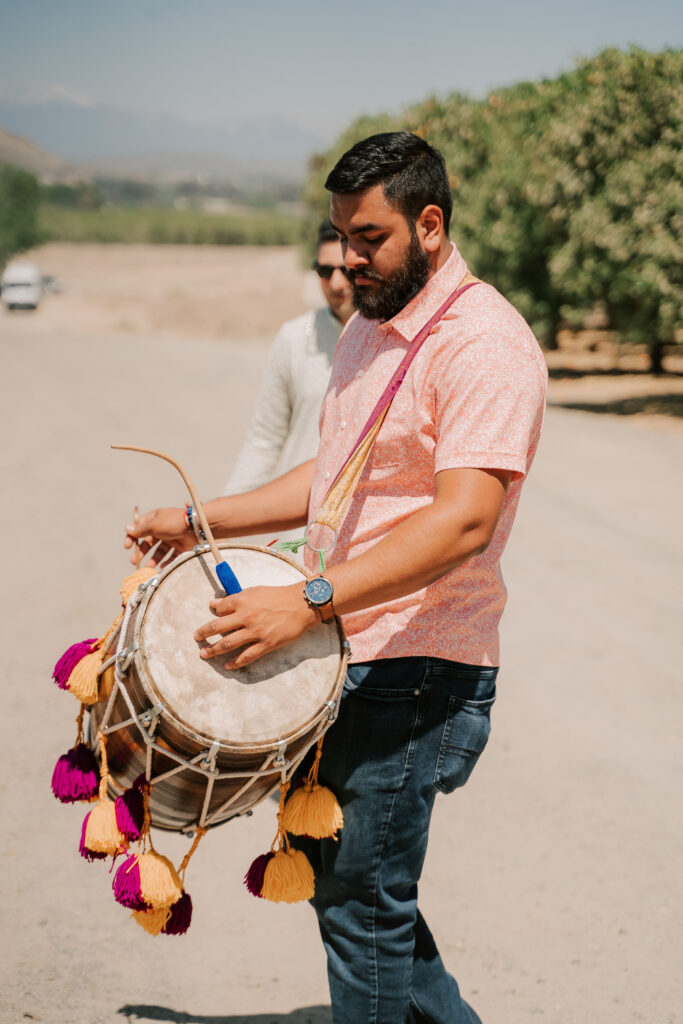
For one couple, it might be the energy and joy of a baraat. For another, it might be the intimacy of exchanging personal vows in front of a small group. Some couples feel deeply connected to religious rituals, while others are more focused on the overall atmosphere and guest experience.
This step is easy to rush, but it’s the foundation for everything that follows. Fusion weddings often become complicated when couples try to include everything—every ritual, every expectation—without asking whether it actually resonates. The result can feel disjointed or overwhelming.
Clarity early on allows you to be intentional, not reactive.
DESIGN A WEDDING THAT FLOWS, NOT SPLITS
Once you understand your priorities, the next shift is in how you structure your wedding. Instead of approaching it as two separate sets of traditions that need to be “fit in,” think about how they can be woven together into a cohesive experience.
The most successful fusion weddings don’t feel segmented. They don’t pause and restart between cultures, they move.
A ceremony might begin with a Western-style processional but take place under a mandap, incorporating meaningful South Asian rituals like the exchange of garlands or the saat phere. Personal vows can exist alongside traditional blessings. A reception might open with a first dance and seamlessly transition into a high-energy dance floor that includes both Bollywood and Western music.
The goal isn’t to dilute either culture. It’s to let them coexist naturally.
GUIDE YOUR GUESTS THROUGH THE EXPERIENCE
One of the most overlooked aspects of fusion wedding planning is the guest experience, especially when not everyone is familiar with both cultures.
You’re not just designing moments for yourselves, you’re guiding people through something new.
Small, thoughtful touches go a long way. A beautifully written program explaining ceremony rituals, an officiant or MC who provides light context in real time, or even subtle cues in the flow of the event can help guests feel included rather than confused.
When people understand what they’re witnessing, they connect to it more deeply. And that connection is what makes the experience memorable.
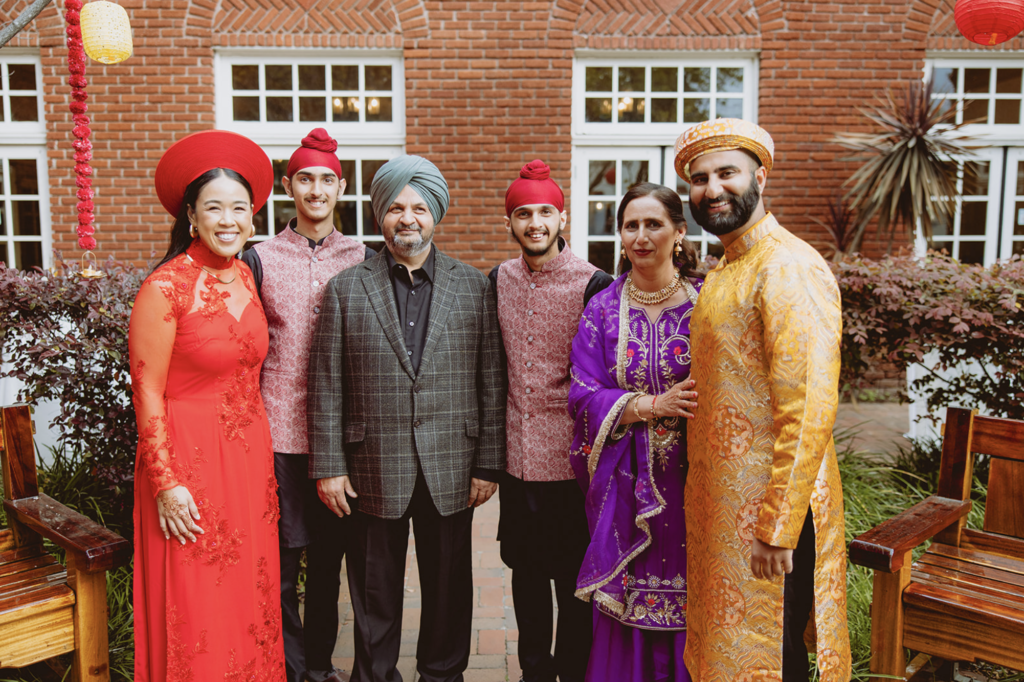
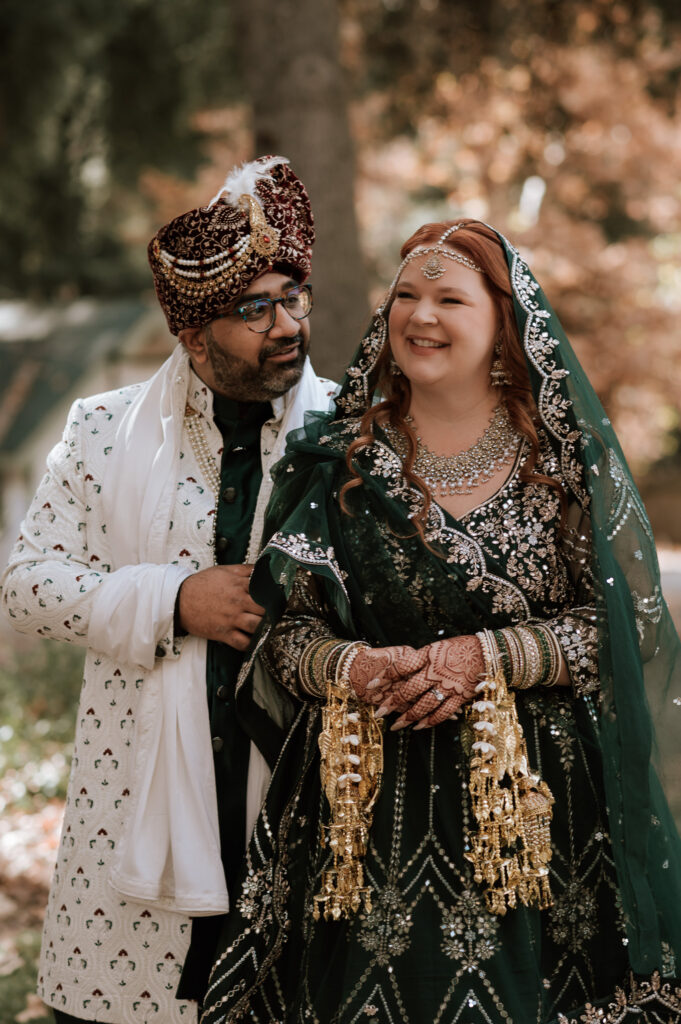
RETHINK TRADITIONAL ATTIRE
Clothing is often where couples feel the tension between tradition and individuality most strongly. South Asian weddings are known for their richness and detail, while Western bridal fashion often leans more minimal.
In a fusion wedding, you don’t have to choose.
Some couples opt for multiple outfit changes, using different events to highlight different aspects of their identity. Others choose to blend elements into a single look, like pairing traditional embroidery with a more contemporary silhouette, or styling a lehenga in a way that feels modern and personal.
The key is to avoid treating your wardrobe like a costume. You should feel like yourself, not like you’re stepping into a role.
BLEND AESTHETICS WITH INTENTION
Fusion doesn’t mean splitting your design in half; it means finding the intersection.
That might look like incorporating traditional South Asian textiles into a more modern, editorial design approach. Or using clean, architectural elements to frame culturally significant pieces like a mandap.
The difference between a wedding that feels cohesive and one that feels disconnected often comes down to intention. When every design choice is rooted in a clear vision, the result feels elevated rather than overwhelming.
NAVIGATE FAMILY EXPECTATIONS WITH CLARITY
Family dynamics are an unavoidable part of wedding planning, and in fusion weddings, they often carry even more weight.
There may be expectations around which traditions are included, how they’re executed, or even how the wedding unfolds. These conversations can be sensitive, especially when cultural practices are deeply tied to identity and heritage.
The instinct might be to avoid conflict or to accommodate everything, but that usually creates more stress later. Instead, approach these conversations early, with clarity and respect. Share not just what you’re planning, but why it matters to you.
When people understand your intention, they’re more likely to support your choices, or at least respect them.
And if they don’t, it’s important to stay grounded. This is your wedding, not a performance for approval.
TELL YOUR STORY THROUGH FOOD & MUSIC
Food and music are where fusion weddings often come alive in the most tangible way. They’re also two of the most powerful tools you have for storytelling.
A well-designed menu can blend culinary traditions in a way that feels cohesive rather than divided. You might incorporate regional South Asian dishes alongside Western favorites, or create fusion-inspired offerings that reflect both cultures in a single bite.
Music works the same way. A thoughtfully curated playlist—or a DJ who understands how to read the room—can bridge cultural gaps and bring everyone together on the dance floor.
It’s not about rigidly alternating between styles. It’s about creating a rhythm that feels inclusive, energetic, and true to you.
BE REALISTIC ABOUT YOUR TIMELINE
South Asian weddings are often multi-day celebrations, while Western weddings tend to be more condensed. Fusion weddings sit somewhere in between, and figuring out your timeline requires intention.
Whether you’re planning a full weekend of events or a single-day celebration with layered elements, what matters most is that it feels manageable.
Trying to compress too many traditions into a short window can make the experience feel rushed. On the other hand, a longer schedule requires thoughtful planning to maintain energy and engagement.
There’s no perfect formula here, just what works best for you, your guests, and your vision.
WORK WITH A TEAM THAT UNDERSTANDS BOTH WORLDS
Fusion weddings require more than just logistical coordination; they require cultural awareness.
You need a team that understands the nuances of different traditions, can anticipate potential challenges, and knows how to bring everything together seamlessly. This isn’t just about execution, it’s about translation. Of ideas, of expectations, of meaning.
The right planner becomes a bridge between cultures, helping you create something cohesive rather than chaotic.
EMBRACE THE COMPLEXITY
It’s worth saying this plainly: fusion weddings take more work. There are more decisions to make, more conversations to have, and often more moving parts to manage. Without a clear template to follow, you’ll find yourselves creating your own structure from scratch. But within that complexity is something rare.
You’re not just planning a wedding, you’re defining what your shared culture looks like. The choices you make now will shape how you celebrate, how you gather, and how you carry both of your backgrounds forward together.
LET IT FEEL LIKE YOU
If there’s one thing to hold onto throughout this process, it’s this: your wedding doesn’t need to prove anything. It doesn’t need to check every cultural box or meet every expectation. It just needs to feel honest.
When your guests walk into your wedding, they shouldn’t feel like they’re observing two cultures side by side. They should feel like they’re stepping into your world—one that honors where you come from while making space for where you’re going.
That’s what makes a South Asian fusion wedding work. Not perfection. Not balance.But something that feels entirely, unmistakably yours.